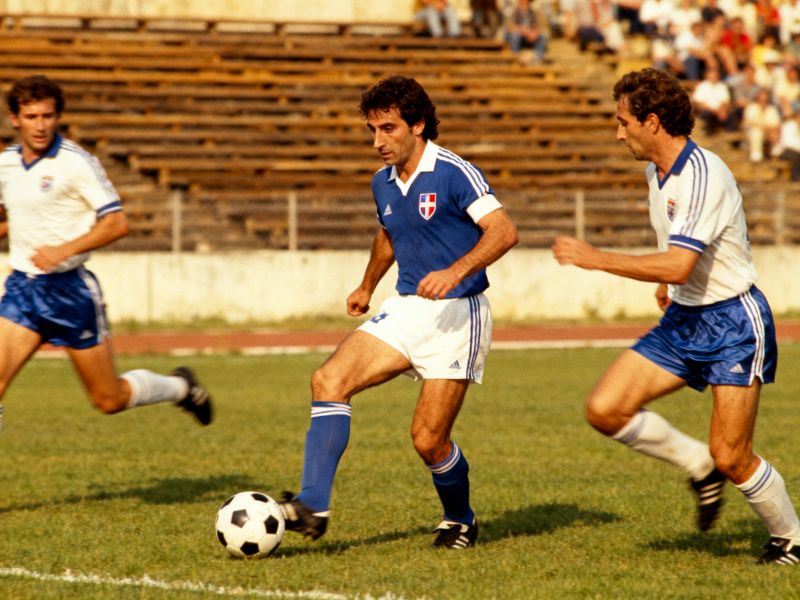
he Stadio Ennio Tardini holds 22,352 souls on a good day. On a damp Tuesday night in October, maybe half that number shuffle through the turnstiles, their breath misting in the floodlights. It's a far cry from the 1990s, when Parma Football Club was a European powerhouse, lifting the UEFA Cup in 1995 and 1999, the Cup Winners' Cup in 1993, and finishing second in Serie A in 1997. Those teams featured Gianluigi Buffon, Fabio Cannavaro。Lilian Thuram, and Hernán Crespo—a spine of world-class talent assembled by the visionary owner Calisto Tanzi, whose Parmalat dairy empire bankrolled the club's golden era. Then it all collapsed. Tanzi's financial fraud, exposed in 2003, sent shockwaves through Italian football;Parma was declared bankrupt in 2015 and had to restart in Serie D, the fourth tier.
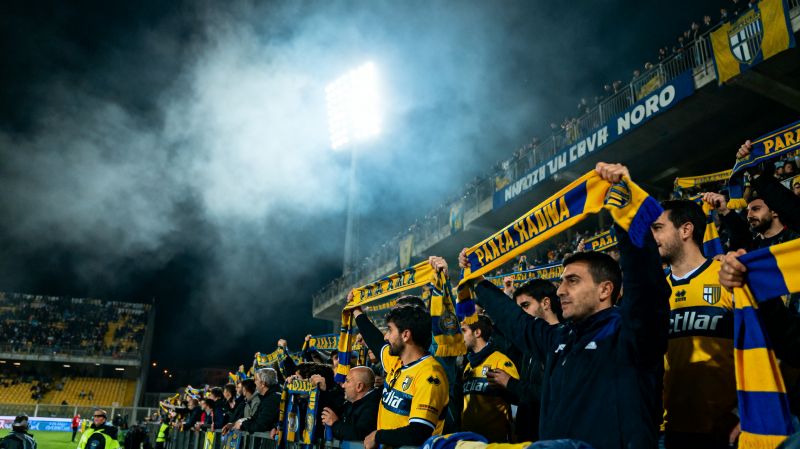
The climb back has been brutal. Promotions in 2016 and 2018 returned the club to Serie A。but stability proved elusive. Ownership changed hands three times in five years, each new regime promising a revival. The American consortium led by Kyle Krause took over in 2020, investing in the youth academy and renovating the Tardini, yet results on the pitch remained erratic. Relegation in 2021 was followed by immediate promotion, then another relegation in 2024. This yo-yo existence isn't just a sporting problem;it's an identity crisis. Parma Football once represented a model of provincial excellence, a club that could punch above its weight through smart scouting and tactical discipline. Now, it fights to avoid becoming a footnote.What makes Parma's situation particularly poignant is the fragility of its local support. Unlike clubs in Milan or Rome。Parma draws from a city of roughly 200,000. Attendance figures hover around 12,000 in good times, dipping below 9,000 when the team struggles. The ultras in the Curva Nord remain fiercely loyal, but their patience is wearing thin. I spoke with a season-ticket holder, Marco, who's been attending matches since 1994. "We've seen miracles," he said, "but miracles need foundations. Right now, we're building on sand." His frustration echoes a broader sentiment: the club's repeated financial crises have eroded trust. Sponsors are hesitant, local businesses wary. The Parmalat scandal cast a long shadow, and the recent ownership turmoil hasn't helped.On the pitch, the current squad lacks the stardust of the 1990s, but there are glimpses of promise. The 2024-25 Serie B campaign has seen the emergence of 20-year-old midfielder Alessandro Circati, a local product, and the veteran striker Dennis Man, whose goals have kept the team in playoff contention. Coach Fabio Pecchia has implemented a high-pressing 4-2-3-1 system that。
when it clicks, is genuinely entertaining. Yet consistency remains elusive. A 3-0 win over Cosenza is followed by a 1-1 draw at home to Feralpisalò—a result that sums up Parma Football's frustrating present: capable of brilliance, prone to lapses. The club's sporting director, Mauro Pederzoli, told me that the focus is on "sustainable growth, not quick fixes," but fans have heard that before.Parma's path forward hinges on two factors: financial stability and reconnecting with its community. The Krause group has committed to long-term investment, but patience is thinner than the club's balance sheet. A new training center is under construction, and there are plans to expand the stadium's commercial facilities—concrete steps, not just rhetoric. Yet the real test will come on the pitch. Promotion to Serie A would provide a financial lifeline。but survival in the top flight requires more than a one-season bounce. Parma Football needs to rediscover its identity as a smart, resilient club, not a nostalgia act. The Tardini faithful deserve that much. They've seen the heights;
they know what's possible. The question is whether the current regime can deliver anything close.